
Free Speech Therapy Activities for Neurodiverse Children You Can Try Right Now

SocialDiverse Admin
Published · 3 min read
209 views
0 likes
0 comments
0 shares
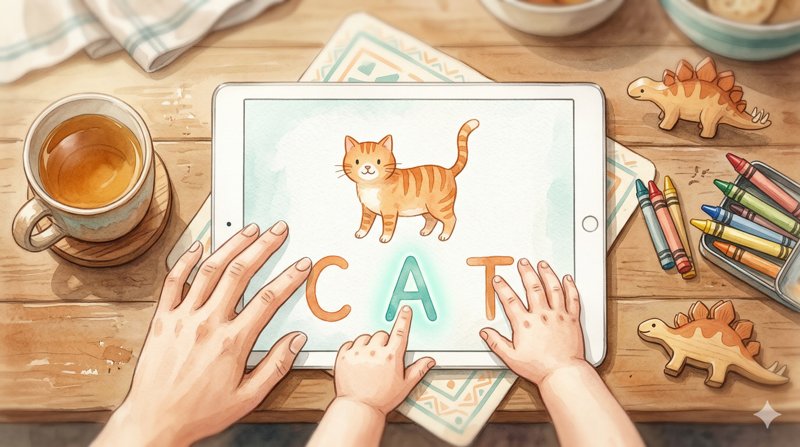
If you're a parent of an autistic child looking for free speech therapy activities, you're not alone. Waitlists are long, therapy is expensive, and most apps either cost a fortune or aren't designed for how neurodivergent children actually learn.
Here are free, evidence-informed activities you can start today — no download, no credit card, no login required.
## Why Most Speech Apps Don't Work for Autistic Kids
Most mainstream typing and speech apps are built for neurotypical children. They use:
- **Loud buzzers** when the child makes a mistake
- **Time pressure** that creates anxiety
- **Red marks and wrong-answer screens** that feel punishing
- **Cluttered interfaces** that cause sensory overload
For a child with autism, ADHD, or sensory processing differences, this isn't learning — it's distress.
## What Actually Works: Zero-Failure Learning
Research in special education consistently shows that **errorless learning** — where the child is guided toward the correct answer rather than punished for wrong ones — produces better outcomes for neurodivergent learners.
The key principles:
1. **Guide, don't test** — highlight the right answer before the child has to guess
2. **Encourage, don't correct** — say "try this one" instead of "wrong"
3. **Repeat without judgment** — let the child practice as many times as they want
4. **Use multiple senses** — combine visual, audio, and motor learning together
## Free Activities You Can Try Right Now
### 1. Letter Recognition with Audio (Speech Training)
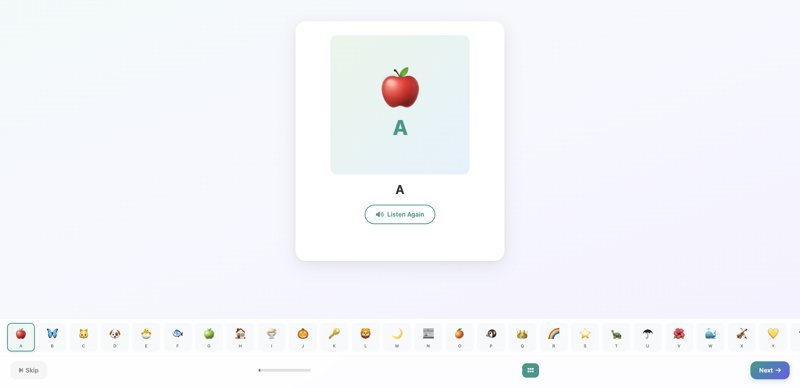
**What it does:** Shows a letter, speaks the sound, and lets the child press the correct key on a guided keyboard.
**How it helps:** Builds the connection between seeing a letter, hearing its sound, and pressing the right key — all at the child's own pace.
**Best for:** Children learning the alphabet, early readers, or those working on letter-sound association.
**Try it free:** [SocialDiverse Speech Training](https://socialdiverse.com/activities/speech-training/) — no login needed.
### 2. Picture Card Practice
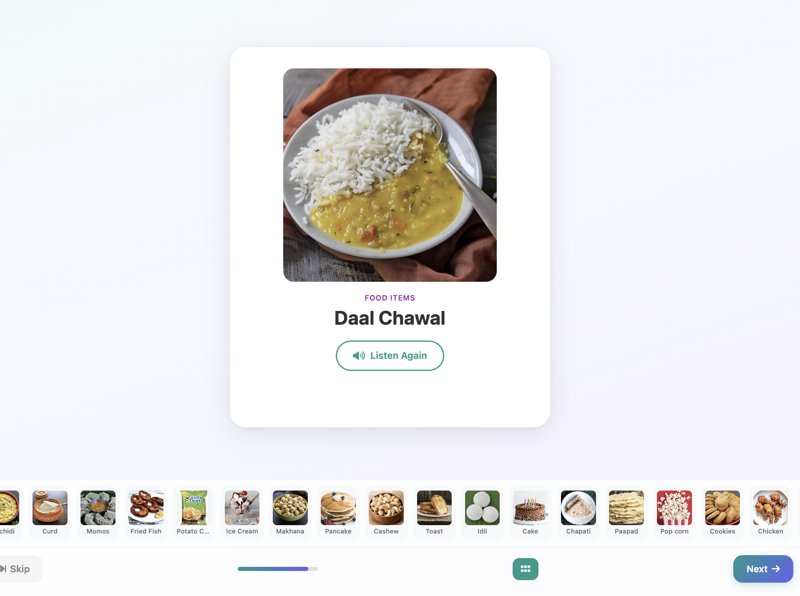
**What it does:** Shows a picture (apple, cat, ball), speaks the word, and lets the child match or identify it through typing.
**How it helps:** Builds vocabulary through visual association. The child sees the image, hears the word, and connects them through motor action (typing).
**Best for:** Children who are visual learners, minimally verbal, or building early vocabulary.
**Try it free:** [SocialDiverse Picture Cards](https://socialdiverse.com/activities/speech-training/) — available in the Speech Training module.
### 3. Word Practice (Guided Typing)
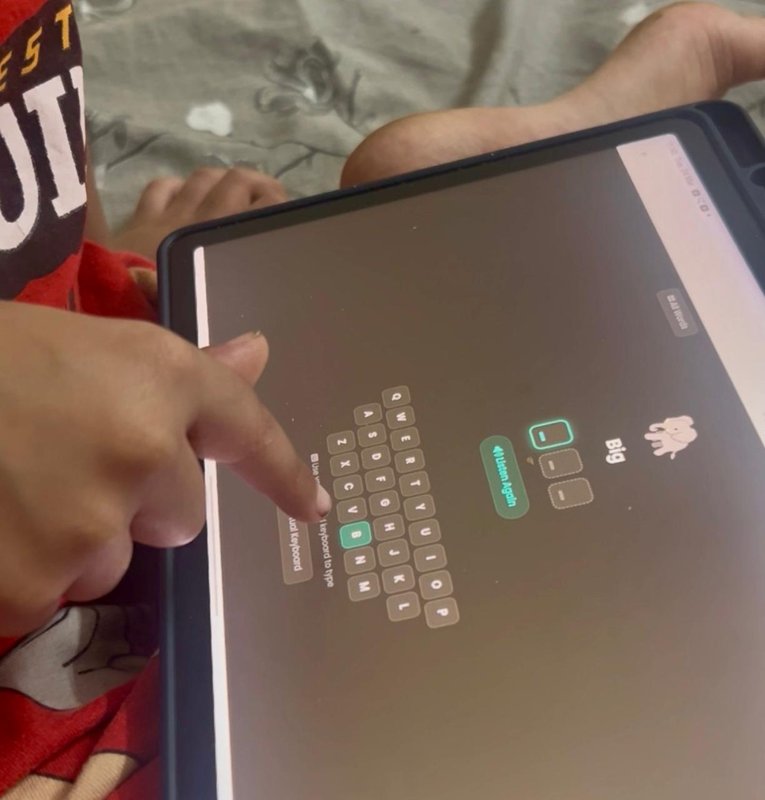
**What it does:** The child types a word letter-by-letter (like C-A-T) with:
- A gentle voice saying each letter as they type
- The keyboard highlighting which key to press next
- A soft voice saying "Beautiful work!" when they complete the word
- An emoji or image showing what the word means
**How it helps:** Builds word recognition, spelling, and fine motor skills simultaneously. The zero-failure design means the child never gets a "wrong answer" — they're gently guided back if they press the wrong key.
**Best for:** Children transitioning from letters to words, those with speech delays, or children who need repetition without pressure.
**Try it free:** [SocialDiverse Word Practice](https://socialdiverse.com/activities/speech-training/) — inside the Typing Learning Game.
### 4. AI Care Buddy for Parents
**What it does:** An AI assistant called Kittu that parents can ask questions like:
- "How do I handle a meltdown during homework?"
- "What speech exercises can I do at home?"
- "What therapies are recommended for ADHD?"
**How it helps:** Gives parents immediate, practical guidance based on evidence-based approaches — available 24/7 when you can't reach your therapist.
**Try it free:** Available on [SocialDiverse](https://socialdiverse.com) after signing up (free).
## Tips for Using These Activities at Home
1. **Keep sessions short** — 5-10 minutes is plenty. End on a win.
2. **Follow the child's interest** — if they love cats, practice "cat" first.
3. **Don't force it** — if they're not in the mood, try again later.
4. **Celebrate everything** — every letter typed is progress.
5. **Use the slowest speed setting** — give them time to process.
6. **Turn off guided mode gradually** — start guided, then let them try independently when ready.
## When to Seek Professional Help
These activities are supplements, not replacements for professional speech therapy. Consult a speech-language pathologist if your child:
- Is not babbling by 12 months
- Has no single words by 16 months
- Is not combining two words by 24 months
- Has lost speech or social skills at any age
## About SocialDiverse
[SocialDiverse](https://socialdiverse.com) is a free community platform built by a neurodiversity parent for the neurodiversity community. It offers speech training activities, an AI care buddy, community support, child progress tracking, and therapy planning tools — all at no cost.
No waitlist. No subscription. Just support when you need it.
Follow us on [Instagram](https://www.instagram.com/socialdiverse.official/) for tips, activities, and community stories.
You're exploring something meaningful
Join India's neurodiversity community to read the full article, connect with experts, and access resources that make a difference.
Free forever — no credit card needed
Already a member?
Log in to continue reading


0 Comments
Join the conversation
Share your thoughts — log in or create an account to comment.