
The Brain-to-Mouth Disconnect: A Definitive Guide to Apraxia in the Neurodiverse Journey
SocialDiverse Admin
Published · 4 min read
425 views
0 likes
0 comments
0 shares
**Speech** is often taken for granted as a seamless bridge between thought and expression. But for many in the neurodivergent community, that bridge has a complex toll.
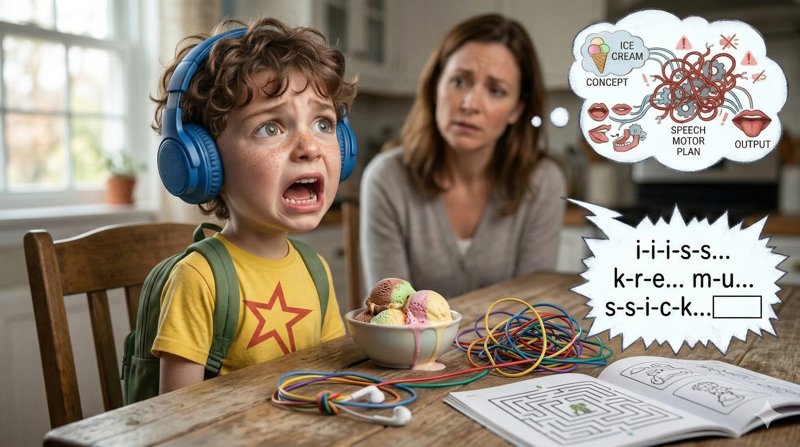
**Apraxia**—specifically Childhood Apraxia of Speech (CAS) and Acquired Apraxia of Speech (AOS)—is not a matter of "not knowing" what to say, but a neurological motor-planning challenge.
## Childhood Apraxia of Speech and Autism
Childhood Apraxia of Speech (CAS) is a motor speech disorder that makes it difficult for a child to coordinate the muscle movements necessary for talking. When a child is also autistic, these challenges often overlap, making it hard to identify the underlying cause of their non-speaking status. While both can affect a child’s ability to communicate, they do so in distinct ways: CAS involves the physical planning of speech, while autism relates more to social and communication development.
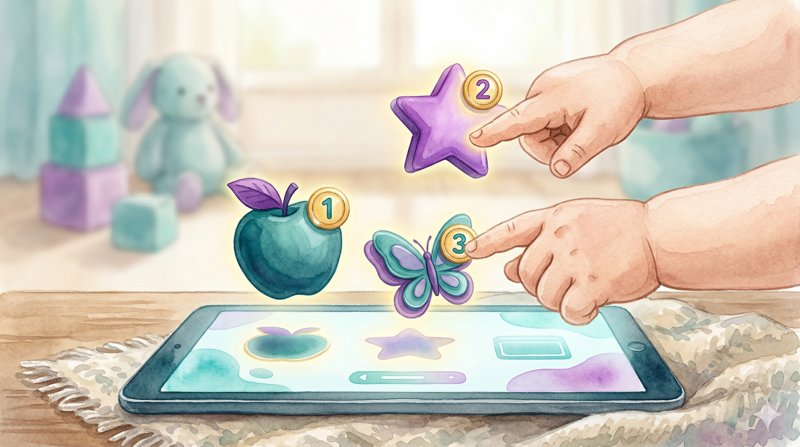
The complexity of these interactions—and the general rarity of a CAS diagnosis—often leaves families without clear answers as to why their child cannot talk while others with the same diagnosis can. I’ve visualized this concept by highlighting the metaphorical disconnect that occurs when the brain's signals cannot properly direct the muscles used for speech.
For the [SocialDiverse](https://socialdiverse.com/) community, understanding this condition is vital.
-----
## **1. The Diagnosis: When and How to Seek Help**
Apraxia is often misdiagnosed as a general speech delay. However, unlike a delay where a child follows a typical path more slowly, apraxia is an **inconsistency of movement**.
### **When to seek a Clinical Evaluation:**
* **For Children:** If your child babbles very little as an infant, loses words they once had, or shows "groping" (visible struggling of the mouth to find positions).
* **For Adults:** If after a stroke, injury, or the onset of a neurological condition, speech becomes "robotic," staccato, or inconsistent.
### **Clinical Steps for Diagnosis:**
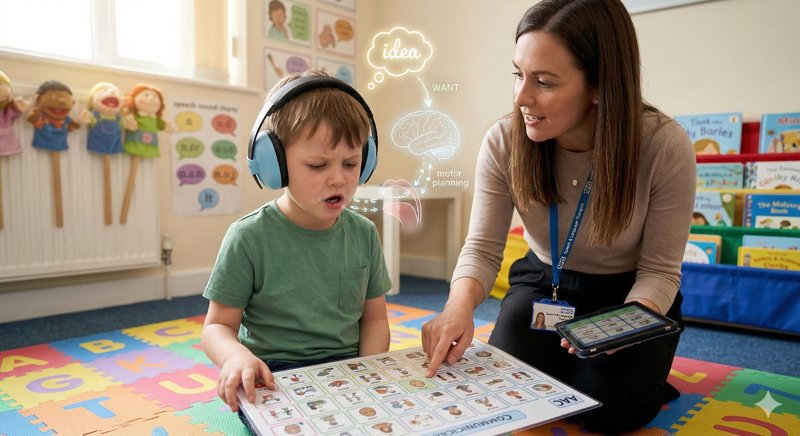
1. **Speech-Language Pathologist (SLP) Assessment:** The "gold standard." An SLP will conduct an oral-motor exam to check for structural issues (like tongue-tie) and observe the "melody" of speech.
2. **The "Soft Diagnosis":** For children under three, practitioners often use a "suspected CAS" label to begin intensive motor-planning therapy immediately while the brain is most plastic.
3. **Ruling Out Comorbidities:** Evaluations must rule out **Dysarthria** (muscle weakness) and **Aphasia** (language comprehension issues), though they can sometimes co-occur.
-----
## **2. Oral Placement Therapy (OPT): When "Look and Listen" Isn't Enough**
Standard speech therapy relies on "Look at me and say what I say." For those with apraxia, this is often insufficient because they cannot "feel" where their tongue or lips are.
**When to ask for OPT:**
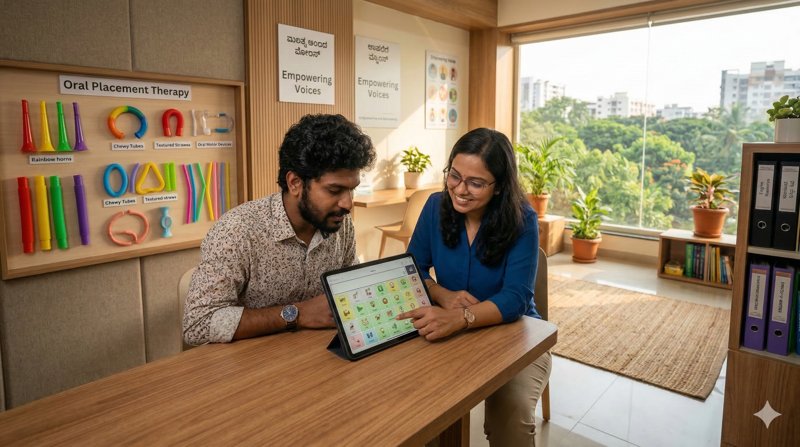
If your child or an adult learner does not respond to visual or auditory cues alone, **Oral Placement Therapy (OPT)** is the next step. It uses tactile-proprioceptive feedback to "teach" the brain the correct mouth positions.
### **Essential Apraxia Tools for 2026:**
* **Horns and Whistles:** Used in a hierarchy to improve breath control and lip rounding.
* **Straw Therapy:** Specialized straw drinking hierarchies to facilitate tongue retraction.
* **Chewy Tubes:** To build jaw stability and symmetry.
* **Tactile Cues (PROMPT):** The therapist uses their hands to physically guide the speaker's jaw, lips, and tongue into position.
-----
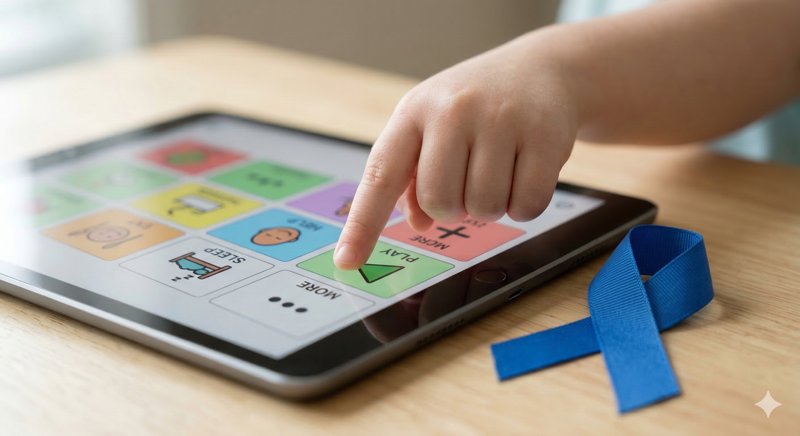
## **3. The 2026 Digital Toolkit: AI and AAC**
In 2026, technology is no longer just a "replacement" for speech; it is a bridge to it.
* **Avaz AAC:** A leading app in India that uses a research-based order of core words to help users progress from single icons to full sentences.
* **Articulation Station Hive:** Uses AI to provide **instant feedback** during at-home practice, adjusting the difficulty of drills based on the user's performance.
* **Lingraphica Devices:** Specifically designed for adults with Acquired Apraxia, these devices include video modeling to help teach muscles the shapes of words.
* **Speech Blubs:** A gamified app where children learn by watching "peers" (video models) pronounce words correctly.
-----
## **4. Detailed Q\&A: Your Questions Answered**
**Q1: My child is non-verbal. Will using a tablet (AAC) stop them from ever speaking?**
**Answer:** Absolutely not. Research in 2026 confirms that AAC acts as a **bridge**. By reducing the intense frustration of being unable to communicate, it provides the psychological safety needed to keep practicing verbal speech sounds.
**Q2: How is Apraxia different from Dyspraxia?**
**Answer:** They are related but distinct. **Dyspraxia** is an "umbrella" term for partial motor planning issues (like clumsiness or trouble writing). **Apraxia** is the most severe form, often referring to a complete (or nearly complete) loss of a specific motor function, like speech.
**Q3: Can neurodivergent adults develop speech issues later in life?**
**Answer:** Yes. **Acquired Apraxia of Speech (AOS)** can occur in adults due to stroke, traumatic brain injury, or neurodegenerative conditions like dementia. Recovery focuses on "re-learning" movement sequences through intensive repetitive practice.
**Q4: Is Apraxia "curable"?**
**Answer:** While it is a lifelong neurological difference, it is highly manageable. With early, intensive, and individualized therapy (3–5 times per week), many children can achieve near-normal speech clarity.
**Q5: Where can I find a community in India?**
**Answer:** Organizations like the **India Autism Center (IAC)** and platforms like [SocialDiverse](https://socialdiverse.com/) , **SoulUp** offer therapist-led groups for adults and families to share experiences and find vetted specialists.
-----
### **Reference Links & Help Resources:**
* **Clinical Resources:**(https://www.asha.org/public/speech/disorders/childhood-apraxia-of-speech/)
* **Parent Support:** [Apraxia Kids Awareness & Community](https://www.apraxia-kids.org/awareness/)
* **Therapy Tools:**([https://talktools.com/pages/what-is-opt](https://talktools.com/pages/what-is-opt))
* **Indian Support:**([https://indiaautismcenter.org/blog/speech-therapy-for-adults-improving-communication-and-quality-of-life/](https://indiaautismcenter.org/blog/speech-therapy-for-adults-improving-communication-and-quality-of-life/))
* **Support Groups:**([https://www.soulup.in/products/autism-support-group](https://www.soulup.in/products/autism-support-group))
-----
You're exploring something meaningful
Join India's neurodiversity community to read the full article, connect with experts, and access resources that make a difference.
Free forever — no credit card needed
Already a member?
Log in to continue reading

0 Comments
Join the conversation
Share your thoughts — log in or create an account to comment.