
Beyond the 'Zombie Stare': A Parent’s Guide to Screen-Smart Adventure in 2026.

SocialDiverse Admin
Published · 3 min read
374 views
0 likes
0 comments
0 shares
**You’ve seen it: the stone-still posture, the unblinking eyes, the “1,000-yard stare.” It looks like focus, but it’s actually a neurological trance. In 2026, parents are finally uncovering the truth behind high-speed media—and how it’s reshaping our children's nervous systems.**
For years, we’ve used the “tablet babysitter” to catch a breath. But as meltdowns skyrocket and attention spans dwindle, a new movement in **Slow Motherhood** is sounding the alarm. The culprit isn't just *how much* they watch, but *how fast* they watch it.
---
> ### **⚠️ Research Disclosure**
*This guide is purely research-based. The series and channels mentioned are cited based on 2026 developmental guidelines and independent pedagogical reviews from sources such as the American Academy of Pediatrics (AAP) and sensory integration specialists. No compensation was received from any media production company for these inclusions.*
---
## 1. The Dopamine Spike: Why Fast Shows Feel Like “Brain Candy”
Modern children’s programming has undergone a radical transformation. While 90s classics like *Mister Rogers* featured long, unhurried shots, many modern shows now feature scene cuts every **2–3 seconds**.
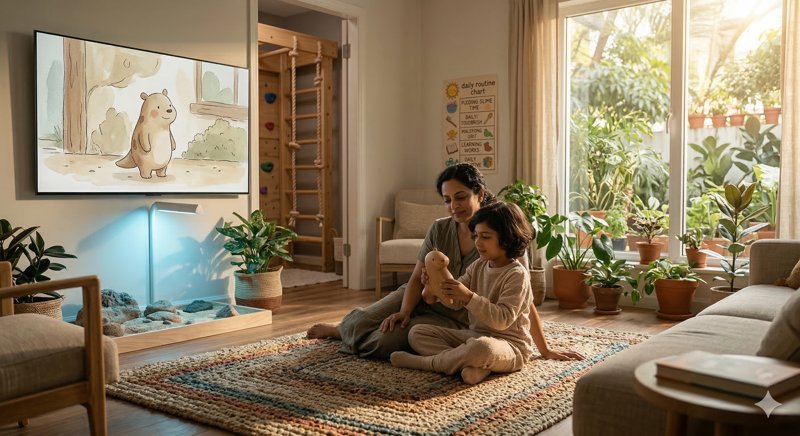
**What’s happening inside their brain?**
* **Constant Dopamine Hits:** Every rapid cut triggers a small dopamine spike, training a developing brain to crave high-speed stimulation rather than steady engagement ``.
* **The Processing Gap:** Unlike older shows that gave kids time to think, modern pacing rushes from moment to moment, leaving zero space for the working memory to process language ``.
* **Visual Overload:** Neon colors and high-contrast animation act as “visual candy.” It feels good in the moment, but it leaves the nervous system depleted and “cranky” once the screen turns off ``.
---
## 2. The “Walk Away” Test: Is Your Show Screen-Smart?
In 2026, the gold standard for evaluating media isn't just a timer; it’s the **“Walk Away” test** ``.
**Ask yourself:** *Can my child turn off the show without a massive emotional meltdown?*
Parents have observed that while children often scream when high-stim shows end, they are typically calm and ready to transition to play when a show like *Little Bear* finishes ``. If the transition away from the screen feels like a physical withdrawal, the show is likely too stimulating for your child’s current neurological state.
---
## 3. The 2026 Low-Stimulation Watchlist
The shift toward **Screen-Smart Adventure** means choosing “mental nutrition” over “digital junk food.” These shows are selected by researchers for their slow pacing, soft palettes, and predictable arcs that calm the nervous system ``.
| Age Group | Research-Backed Recommendation | Why It Works |
| --- | --- | --- |
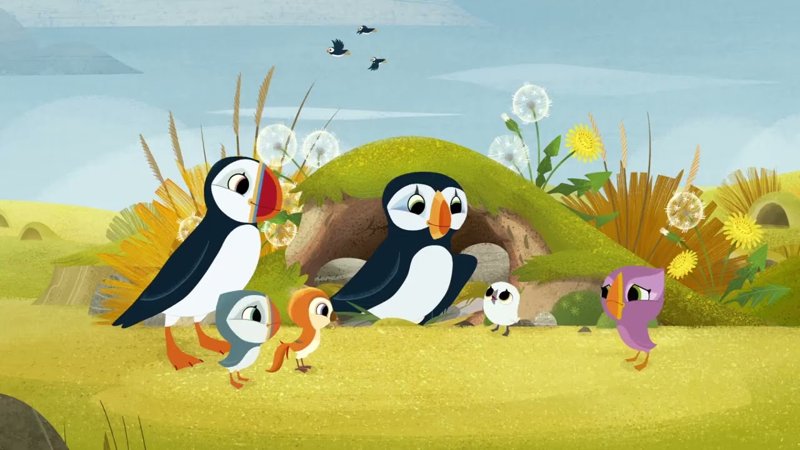
| **0–2 Years** | *Puffin Rock* | Watercolor animation and gentle narration that supports language acquisition ``. |
| **2–4 Years** | *Tumble Leaf* | Stop-motion pacing that encourages curiosity and scientific thinking ``. |
| **Preschool** | *Daniel Tiger* | Models emotional regulation through unhurried, repetitive songs ``. |
| **The "Zen" Pick** | *Bluey* (Episode: "Rain") | A dialogue-free masterpiece of music and imaginative play that reduces auditory load ``. |
---
## 4. Curated Learning: Screen-Smart Video Resources
To transition from passive consumption to active engagement, we recommend these curated channels that prioritize educational depth and calm pacing.
#### The "Slow Media" Library
**** – Focus: Research-backed character learning and balanced content. [Link](https://www.youtube.com/@pbskids)
[Art for Kids Hub] – Focus: Fine motor skills, creativity, and shared family activity. [Link](https://www.youtube.com/@artforkidshub)
**** – Focus: Scientific inquiry explained at a kid-friendly pace.
[Mindful Kids] – Focus: Social-emotional regulation and calming environments. [Link](https://www.youtube.com/@MindfulKids)
---
## 5. Navigation: From Passive Staring to Active Adventure
In 2026, screen time is being wrapped into bigger family rituals rather than “solo scrolls” `[1]`.
* **Co-Viewing:** Language gains skyrocket when an adult describes on-screen action (e.g., “Look, Fig found a new shell!”) ``.
* **Pair with Play:** After an episode of *Trash Truck*, offer a toy truck so the child can reenact the story, bridging the gap from digital to physical play ``.
* **The 20-20-20 Rule:** To protect eye health and reduce digital fatigue, ensure that every 20 minutes, your child looks at something 20 feet away for 20 seconds ``.
---
### **References and Sources**
* `` Guide to Low-Stimulation Shows, Mothers and Moms (2026).
* `` What Actually Counts as a Low-Stimulation Show?, KidsBeeTV Blog.
* `` 10 Low-Stimulation Kids' TV Shows for Calm Evenings, Healthy Happy Life.
* `[1]` Pinterest Parenting Trend Report 2026: Screen-Free Activities & Traditions.
* `` Student Screen Time and Physical Health in 2026, BGS Vijnatham.
* `` Updated AAP Recommendations for Screen Time (Feb 2026), CHOC Health.
* `` Stimulus Level Ratings for Children's Media, Family IT Guy.
You're exploring something meaningful
Join India's neurodiversity community to read the full article, connect with experts, and access resources that make a difference.
Free forever — no credit card needed
Already a member?
Log in to continue reading
0 Comments
Join the conversation
Share your thoughts — log in or create an account to comment.